
The CREATIVE MIND – BLOG

What Is A Creative Scientist?

One way to disrupt a system that has long categorised disciplines into Arts and Sciences is to present design as science. I recently switched my title from Creative Consultant to Creative Scientist. Only one person so far, at the time of writing, has dared seek explanation. I know the general silence from the market is not agreement, but quiet confusion. For generations, design has been miscategorised as a purely expressive art. Although it differs from fine arts in that it does not express personal opinion, it is expressive all the same, conveying ideas. But unlike fine arts, it does significantly more than that; it is a science. It is the science of deliberate, controlled cognitive activation as exemplified by the field of NeuroDesign.

In the Creative Economy, the term ‘Creative Scientist’ is not an adjective; it is a noun. It does not denote a scientist who happens to be creative, but a creative professional and researcher who applies scientific principles and frameworks to deliver highly engineered solutions. The specific core sciences applied in the Creative Industries are Neuroscience and Cognitive Psychology. This is the filter that separates Creative Specialists from the general creatives, the seniors from the juniors.


The Creative Scientist uses visual materials merely as neurological triggers. They are not the product. The product is Neurocognitive Activation (N.C.A.), resulting in scientifically predictable activity or conditions. This is a critical necessity in industrial development, global competitiveness and import substitution, as we can directly manipulate the success of products and productive systems.

As AI replaces humans in menial, repetitive and executional tasks, the Cognitive space offers humans not just a last stand but a much higher level of elevation of the application of human creative intellect. While debate rages on about the future of human creativity, I have already transitioned. In fact, I have been here, waiting for a couple of years; read my book, Riding the Consumer, and you will see what I mean. I started writing the book in 2004 and only decided to publish it in late 2024.

Read More Read Less

Feature

The Future Of Work

Key Pages

BOOKS BY KMAK

There is a Science Behind The Artwork and it’s at work whether your brand is conscious of it or not; unconscious brands, blindly stumble along hoping for the best. Take advantage of the science to build brands deliberately from a strategic, science based approach. Uncover The Science Get a copy

Read More »

KMak BOOKS

There is a science behind the artwork and it’s at work whether your brand is conscious of it or not; unconscious brands, blindly stumble along hoping for the best. Take advantage of the science to build brands deliberately from a strategic, science based approach. Order Your Copy of The Book

Read More »

Top Reads

GtqxwOCWUAAznoy

AGEISM

In these times plagued by ageism, it is critical to bear in mind that the aged are not useless. Representation and youth should not always be the focus. There is value in a slower, more deliberate and pensive mind with dulled emotions and vicennia of experience to draw from. What
Read More »
CRITICAL THINKING RTC 2

The Strategic Power of Design

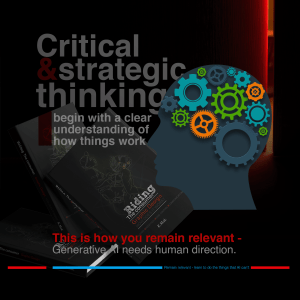
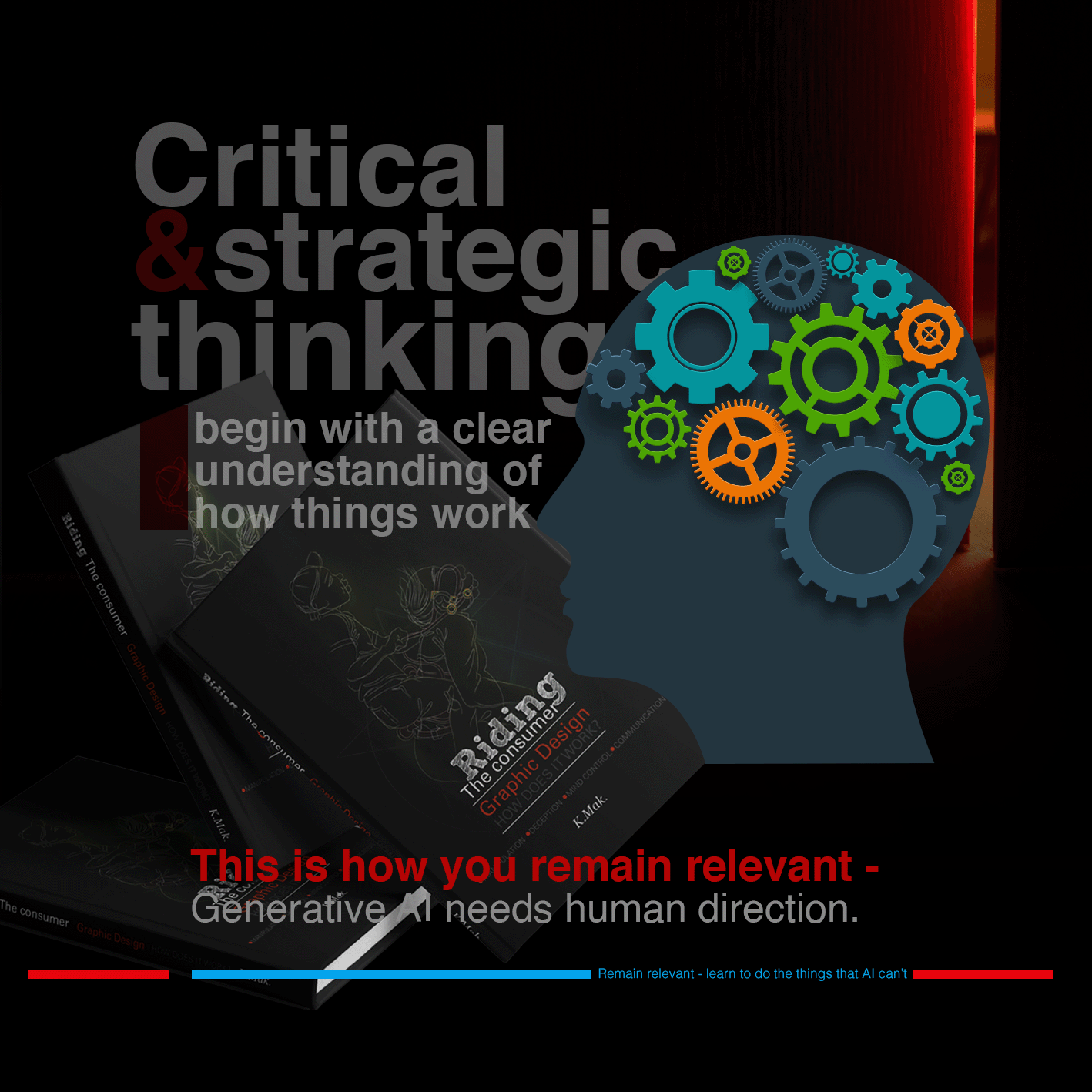
The World Economic Forum’s Future of Jobs Report 2025 consistently highlights critical and strategic thinking as crucial to the key human skills required for the future workforce. Applying these skills begins with a clear understanding of how things work. The book, ‘Riding the Consumer,’ offers valuable insights into how commercial

Read More »
GtKJ1fJXoAEVk3s

Human Transcendence

The Altar for a Co-Evolving AI The greatest danger we face with Artificial Intelligence is not that it will one day surpass us, but that we will prioritise its development at the expense of our own. We must reframe this pivotal moment in history. This is not a race against

Read More »
Image 27 1

FROM BRIEFS TO PROMPTS

The success of any creative endeavour is limited by the quality of the brief. Many subpar designs originate from poorly constructed briefs, and this is especially clear when using generative AI to create something truly original.

Read More »
Standret

Just Do It
Taking a creative leap

‘JUST DO IT’ – The first time I came across this statement I was deep in conversation with a “friend”………….. and; that is about all I am prepared to share on that ‘conversation’ 😉 Too many times we stop before we start because we over process scenarios; either, imagined threats, disqualification

Read More »
RIDING THE CONSUMER POST

Riding The Consumer: the power to control

Why the book title makes so much sense. Are consumers really ridden? Not literally of course, but, if true, in what sense is it so? The advent of the industrial revolution brought about an incredible amount of product variation and competition. This in turn lead to a much welcome increase and

Read More »
PACKED SUPER MARKET SHELVES

No One Buys Product: the ultimate illusion

It Goes Against All Logic Doesn’t It? But then again, we are not creatures of logic, are we? Industrial standardisation has weakened the argument for product quality and uniqueness quite significantly. It has steered consumers towards motivations other than simple quality and function. We “eat” with our eyes now more

Read More »
CEO BottomLine And Creativity

The CEO, The Bottom Line & Creative Services

The Value Of Art In Commerce. A Key Investment Or A Luxury Expense?  The disadvantage of being a formerly colonised country, if you can call it that, given developmental trajectories and our affinity for western ‘sweets’, is that we remained tethered in many ways; psychologically and otherwise. Though we are separate

Read More »
error: Content is protected !!